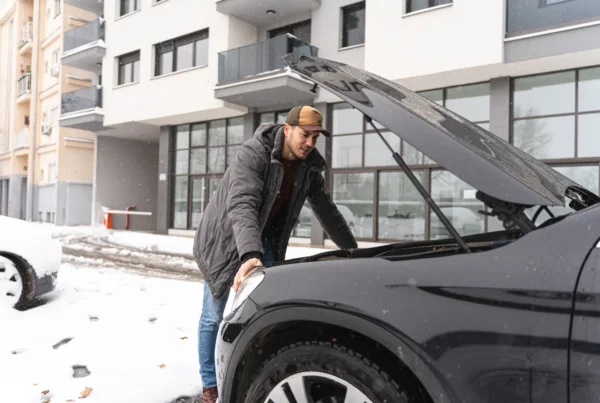

You turn the key on a cold Addison morning and the car sounds like somebody bolted a race exhaust to it overnight. That noise is hard to mistake for anything else. It usually means one of two things: someone crawled under your vehicle and cut the catalytic converter out, or a salt-eaten exhaust finally gave up.
Both make similar noise. They are very different repairs. Here is how to tell them apart, what else gets wrecked when a converter is cut out, and what the fix involves once your vehicle is on the lift at our Addison or Lombard shop.
What a Stolen Catalytic Converter Sounds Like
There is no subtle version of this symptom. AAA puts it plainly: the moment you start the car it is extremely loud, sounding like a motorcycle or a revved race car, and it gets louder as you accelerate.
What owners notice first:
- A deep roar at startup. Cold start is the loudest moment, and it happens before you have even left the driveway.
- Noise that climbs with the throttle. A rusted-out muffler tends to drone at one pitch. A missing converter opens up as engine speed rises.
- Less power than you remember. AAA also notes reduced power on acceleration, and plenty of drivers describe the vehicle feeling flat.
You may also smell exhaust, sometimes inside the cabin. That is the part that matters most for your safety. Exhaust gases that used to exit behind the vehicle are now dumping out underneath it, and they can find their way into the passenger compartment. Keep the drive short, keep the windows down, and get it looked at rather than living with the noise for a week.
A quick look underneath tells you a lot
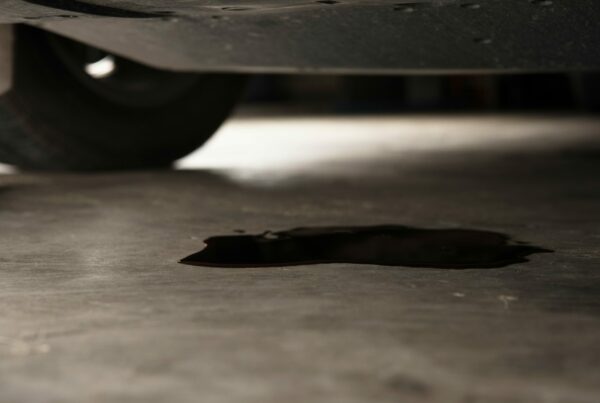
You do not need a lift to get a strong hint. With the vehicle cold and parked on level ground, crouch at the side and look under the middle of the car with a flashlight, the same way you would check for oil leaks.
- Look for a missing section of pipe between the engine and the muffler. A converter theft leaves an obvious gap.
- Check the pipe ends. Fresh saw cuts look bright and raw. AAA describes a hanging or severed exhaust pipe as one of the visible signs.
- Look for dangling wires. Oxygen sensor pigtails left swinging in open air are a theft signature.
- Compare that to rust. A corrosion failure looks flaky, brown and crumbly at a seam, not cleanly sliced.
If what you see matches the first three, you can stop searching for an exhaust shop near you and just call us. We are minutes from most of Addison, Villa Park and Wood Dale.
Why Thieves Pick Certain Vehicles in DuPage County
Converters are targeted for what is inside them. They contain platinum, palladium and rhodium, and according to Farmers Insurance the converters fitted to low-emission vehicles such as hybrids hold more of those metals. That is why hybrids get hit so often.
Access matters just as much as content. Farmers notes that trucks and SUVs are targeted because higher ground clearance makes it easier to get underneath, and that the cut itself takes only a couple of minutes with a saw. AAA sums up the selection process as three factors: ease of access, converter value, and opportunity, with pickups, SUVs and the Toyota Prius at particularly high risk.
Opportunity is the local part of the story. Think about how vehicles sit around here:
- Metra and commuter lots in Villa Park, Lombard and Glen Ellyn where a car is parked and unwatched from morning until evening
- Apartment and townhome lots in Addison, Glendale Heights and Bloomingdale where parking is open to the street
- Contractor vans and fleet trucks staged overnight in yards along the Route 53 and Route 83 corridors
- A pickup in an Elmhurst or Carol Stream driveway with nothing but darkness around it
The scale is real. The National Insurance Crime Bureau reported that insurance claims for converter theft climbed from 16,660 in 2020 to 64,701 in 2022, roughly a 288% increase, and noted the true number is underreported because plenty of thefts never become claims. California and Texas each logged more than 16,000 thefts in 2022.
It reaches DuPage. In a February 2024 case, a driver fled Lombard police on Roosevelt Road at about 100 miles an hour and crashed. Officers searching the wrecked car found four catalytic converters, a jack, a Sawzall and Sawzall blades, and he was charged with possession of burglary tools among other counts.
What Else Gets Damaged in the Cut
This is the part owners rarely expect, and it is why the repair is usually bigger than one part. A thief working fast under a vehicle is not being careful about what surrounds the converter.
Commonly damaged along with the converter:
- Oxygen sensors. There is typically one before the converter and one after it. The downstream sensor sits in the section that walks away, and its wiring often gets cut or torn.
- The flex pipe. That braided coupler absorbs engine movement. Cut it or crush it and it will leak, no matter how good the new converter is.
- Hangers and mounts. The rubber isolators and welded hangers that hold the system in place get yanked, so the remaining pipe sags.
- The mid-pipe. Cuts are rarely placed where a shop would place them, which means the pipe on both sides may be too short or too damaged to reuse.
- Heat shields. Thin sheet metal that is already brittle from Illinois winters tends to bend or tear during the cut.
A landscaping crew’s van in a Lombard lot is the classic example: the converter and the whole mid-pipe section are gone, a sensor pigtail is hanging, and a hanger has been pulled out of its mount. One theft, four repairs.
What Catalytic Converter Replacement in DuPage County Involves
Here is the sequence when a vehicle comes to us after a theft.
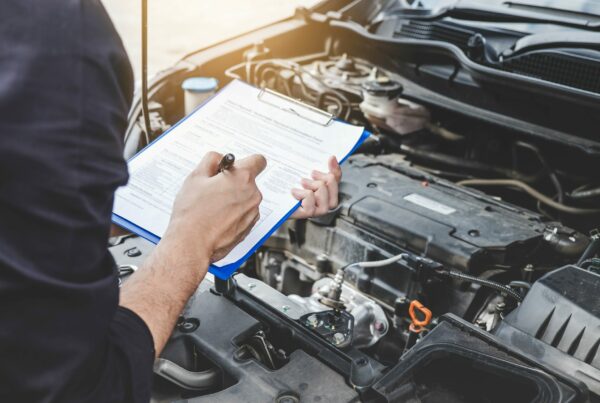
- Inspection and documentation. We put the vehicle on the lift, photograph what is missing and what is damaged, and give you a written summary. If you are filing an insurance claim, that paperwork matters.
- A legal replacement converter goes back in. Not a straight pipe. Removing emissions equipment without replacing it is not something a reputable shop will do, and it leaves the vehicle unable to pass an emissions test.
- Sensors are replaced as needed. A sensor with cut wiring, torn threads or exposure damage gets replaced rather than reused, because a bad reading will keep the check engine light on.
- Pipe is sectioned and welded. Damaged mid-pipe and flex pipe are cut back to clean metal and new sections are fitted so the joints seal properly.
- Hangers, shields and clamps are restored. An exhaust that hangs correctly does not rattle against the floor pan or fatigue at the welds.
- Codes are cleared and the vehicle is road tested. We verify the sensors report correctly, confirm the leak is gone, and listen for anything else the theft disturbed.
Parts availability and converter pricing move with the vehicle, the specific part and the metals market, so we do not publish figures for this work. Bring the vehicle in or request a current quote and we will price it against what your vehicle actually needs.
Rust, Rattles and the Muffler Repair Lombard IL Drivers Actually Need
Not every loud exhaust is a crime scene. Around here, the far more common cause is plain corrosion, and the reason is sitting on the road every winter.
The Illinois Department of Transportation spread 312,000 tons of road salt statewide last winter, kept 542,000 tons stockpiled, and runs more than 1,800 trucks over nearly 45,000 lane miles. The Illinois Tollway adds 196 snowplows over 294 miles of road serving 1.6 million daily drivers, with 112,000 tons of salt stockpiled for the season. If your commute includes I-290, I-355 or North Avenue, every one of those miles is a mile your exhaust drives through brine.
What salt-belt exhaust failure looks and sounds like:
- A rasp that grows over months rather than appearing overnight, usually from a pinhole opening into a seam
- A rattle at idle or over bumps from a heat shield whose spot welds have rusted through
- Ticking that fades as the engine warms, often a leaking manifold or flange gasket that seals up as metal expands
- Sooty black staining around a joint, which marks where exhaust is escaping
A ten-year-old sedan that no thief has ever touched can develop the same rasp as a theft victim, simply because a rusted seam in the mid-pipe finally opened. The repair is completely different. Sometimes a section of pipe and a gasket is all it takes, and the job turns out to be far smaller than the noise suggested. Other times corrosion has run the length of the system and replacing one piece just moves the leak downstream. We will tell you which one you are looking at before any work starts. An undercar look is one of the preventive maintenance habits worth keeping after a Chicago winter.
Why a Converter Code Is Often an Engine Problem
If your check engine light is on and a parts-store scan says P0420, do not go buy a converter yet.
P0420 means Catalyst System Efficiency Below Threshold on Bank 1. It reports that exhaust oxygen content is not being reduced as expected. That is a measurement, not a verdict, and it does not automatically mean the converter failed.
Causes to rule out before condemning the converter:
- Defective oxygen sensors
- Exhaust leaks or a cracked manifold
- Leaking fuel injectors
- Faulty spark plugs or ignition coils
- Engine misfires
- A malfunctioning thermostat
- Outdated PCM software
A leaking flange upstream of the rear sensor lets outside air into the exhaust stream, the sensor reads oxygen that the converter never saw, and the computer concludes the converter is not working. Replace the converter and the light comes right back, because the leak is still there.
The diagnostic order that avoids that mistake:
- Monitor live data and fuel trims
- Check the fuel and ignition systems
- Test the oxygen sensors
- Inspect the intake and exhaust for leaks
- Verify the converter with back-pressure and temperature testing
- Check for PCM software updates last
Other symptoms that travel with P0420 include rough idle, reduced acceleration, poor fuel economy, stalling or misfires, a failed emissions test, and a rotten-egg smell from the tailpipe. Working that list in order, rather than selling a converter on the strength of one code, is how we handle engine diagnostics and tune-up work and the exhaust repair Addison IL drivers bring us every week.
Deterrents Worth Asking About
You cannot make a vehicle theft-proof, but you can make yours the harder target on the block. AAA’s prevention advice comes down to four things.
- Shields and cages. Metal plates, shields or locking cage devices bolted around the converter turn a two-minute job into one a thief will not start.
- Etching. Marking an identifying number on the converter in more than one place makes it traceable and harder to resell.
- Parking position. An enclosed garage is best. If you park outside, choose a well-lit spot with foot traffic nearby, and avoid the back corner of a lot.
- Cameras. A camera pointed at where you park deters some thieves and gives police something to work with if it happens anyway.
Illinois has tightened the resale side too. Public Act 103-0677, signed in July 2024, requires recyclable metal dealers buying a used, detached converter to record the source vehicle’s VIN and the converter’s part or identifying number, and to obtain proof of ownership such as a copy of the title or registration. It treats converters as essential parts rather than ordinary scrap metal, which gives investigators a paper trail to follow.
If you drive a truck, an SUV, a work van or a hybrid and park outside overnight anywhere in western DuPage, ask us about a shield the next time your vehicle is in. It is a short conversation and a straightforward install on most vehicles.
Bring Us the Noise
An exhaust that suddenly got loud deserves a look this week, not next month. We have been diagnosing this stuff for local drivers since 1991, from our Addison shop at 515 S. Grace Street and our Lombard location, and we will show you on the lift exactly what is missing, what is rusted and what is fine.
Schedule an appointment and let our automotive experts get your exhaust quiet, sealed and legal again.